
 فارسی
فارسی English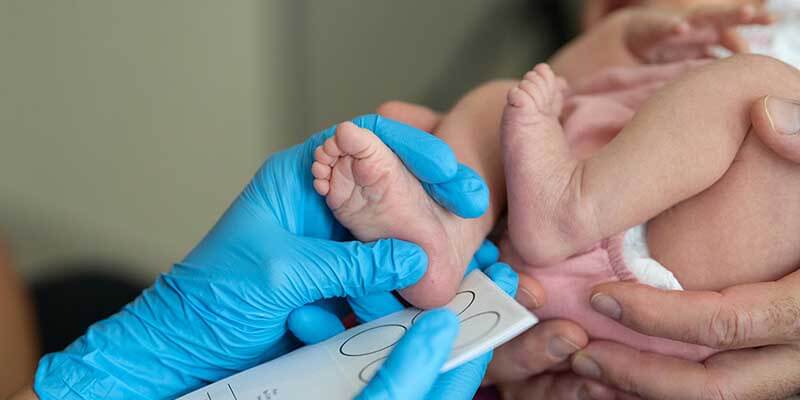
Table of Contents
The hypothyroidism in infants
The thyroid gland secretes thyroid hormones; thyroid hormone controls the speed of body’s metabolism, including: heart rate and body temperature. The hypothyroidism occurs when the thyroid gland is underactive and doesn’t produce enough thyroid hormone to meet the body’s needs. Healthy thyroid function is critical for infants and children, whose developing brains and bodies rely on adequate levels of thyroid hormone. When hypothyroidism in infants isn’t treated, even mild cases can lead to severe physical and mental retardation. There are two types of hypothyroidism in infants and children: Congenital hypothyroidism, which is present at birth, and acquired hypothyroidism, which develops after birth, usually during late childhood or adolescence.
Causes of hypothyroidism in infants
Hypothyroidism in newborns can occur for a variety of reasons. The most common cause of hypothyroidism in the newborn are:
- Complete absence of the thyroid gland
- Lack of development and growth of thyroid gland completely during embryonic
- Development in the wrong place
Other causes:
- Insufficient maternal iodine consumption during pregnancy
- Certain antibodies of the mother or drugs that cause enlargement of the thyroid gland
- Antithyroid drugs taken by the mother
- Failure to secrete thyroid hormone sufficiently by the thyroid gland
- The inability of the pituitary gland to stimulate the thyroid gland to produce thyroid hormones (abnormal formation of the pituitary gland).
Signs of hypothyroidism in infants
- Yellow skin or eyes (known as jaundice)
- Constipation
- Poor muscle tone
- A large, protruding tongue
- Swelling around the eyes
- Cool, pale skin
- Swollen tongue
- Large belly with a navel that sticks out
- Difficulty breathing
- Delayed growth and weight gain
Diagnosis of hypothyroidism in infants
Because early treatment can prevent intellectual disability, all newborns receive a routine screening blood test in the hospital after birth to evaluate thyroid function. In affected newborns, the blood test shows an elevated level of thyroid-stimulating hormone and usually a lower level of thyroid hormone. If the result of the screening test is positive, thyroid function tests, are done. After hypothyroidism of the newborn is diagnosed, doctors do scanning tests to evaluate the size and location of the thyroid gland. These tests include radionuclide scanning or ultrasonography.
- Screening test after birth (from heel prick 24 hours after birth)
- Thyroid function tests
- Scanning tests
Treatment of hypothyroidism in infants
If the diagnosis is confirmed through further thyroid tests, newborns must be treated as quickly as possible. Treatment of hypothyroidism is directed by a doctor who specializes in treating children with problems of the endocrine system (called a pediatric endocrinologist). The treatment is usually with synthetic thyroid hormone, which should be given as a crushed pill mixed with a small amount of breast milk. It should not be given with iron or calcium supplements, which can reduce absorption of replacement hormone.
Complications of hypothyroidism
Children who are born with a severely underactive thyroid gland can develop intellectual disability if the condition isn’t treated quickly. Even with treatment, some children with congenital hypothyroidism may be slower to learn than other kids their age. Other complications of congenital hypothyroidism include:
- An abnormal walk
- An inability to speak
- Autistic behavior
- Vision and hearing problems
- Problems with memory and attention
Reference:
https://www.mayoclinic.org/diseases-conditions/hypothyroidism/symptoms-causes/syc-20350284
https://www.msdmanuals.com/home/SearchResults?query=Hypothyroidism+in+Infants+and+Children&icd9=243%3b244
https://www.babysfirsttest.org/newborn-screening/conditions/primary-congenital-hypothyroidism
https://www.healthline.com/health/congenital-hypothyroidism
https://www.dshs.texas.gov/newborn/infant.shtm





No comment