
 فارسی
فارسی English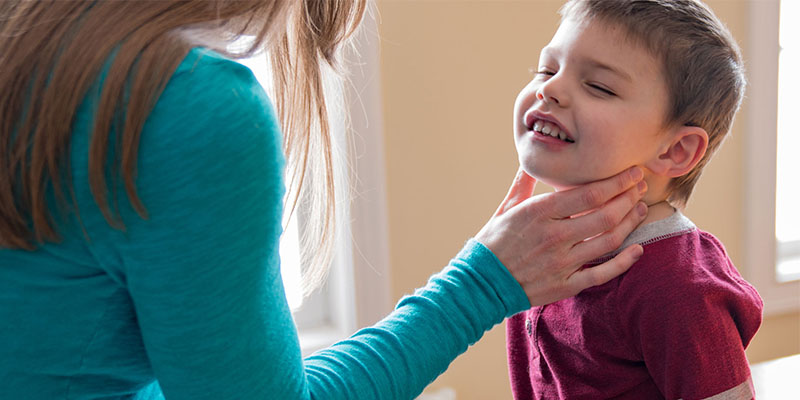
Table of Contents
Thyroid disorders in children
Although thyroid disease occurs less frequently in children than in adults, the signs and symptoms can be similar. However, there are a few important differences that need to be brought to light.
Thyroid gland and its function in the body
consequently have a profound effect upon the human body.The thyroid gland is located at the front of the neck, just below the Adam’s apple. It is responsible for the rate of all metabolic and chemical processes in our body, and affects every cell, tissue, and organ. The thyroid gland is therefore essential for life, growth and development. When the thyroid gland produces too much thyroid hormone (overactive), the condition is called hyperthyroidism. When the thyroid gland produces too little thyroid hormone (underactive), the condition is called hypothyroidism.
Congenital hypothyroidism is a disorder that affects infants at birth, and occurs in about 1 in 4000 live-born babies. It is characterised by the loss of thyroid function, due to the thyroid gland failing to develop normally. In some cases, the gland is totally absent. About 10 per cent of cases are caused by an enzyme defect leading to deficient hormone production, iodine deficiency and a brain pituitary gland abnormality. If the diagnosis is delayed, and immediate treatment is not given, congenital hypothyroidism can lead to growth and developmental defects, and severe mental retardation (cretinism). Within the first week of life, a heelprick blood sample is taken to assess an infant’s thyroid hormone level. If any abnormality is found, a repeat blood sample is taken. If this confirms congenital hypothyroidism, the infant is immediately given thyroid hormone replacement therapy (T4 — thyroxine). Normal growth and development should then continue, with no adverse effects on the child’s mental capacity.
Hypothyroidism in children after 3 years of age
If hypothyroidism develops after the age of 3 (when most thyroid-dependent brain development is complete) the symptoms are insidious and may be difficult to pick up. These include:
- A slow heart rate
- Tiredness or lethargy
- An inability to tolerate the cold
- Dry skin and hair
- Constipation
- Puffiness in the face particularly around the eyes
- Impaired memory and difficulty in thinking
- Poor performance at school
- Depression
- Short
Treatment of hypothyroidism in children
The treatment for hypothyroidism simply relies on giving synthetic thyroxine (Levothyroxine) to augment the low levels of thyroid hormone (T4) which is being produced.
Causes of Hypothyroidism in Children
The most common cause of hypothyroidism in children is a family history of the disease. Children whose parents, grandparents, or siblings have hypothyroidism are at a higher risk for thyroid disease. This is also true if there’s a family history of immune problems that impact the thyroid. Autoimmune conditions, such as Graves’ disease or Hashimoto’s thyroiditis, more commonly appear during puberty. These thyroid conditions more frequently affect girls than boys.Other common causes of hypothyroidism in children include:
- not enough iodine in a child’s diet
- being born with a nonfunctional thyroid or without a thyroid gland (also called congenital hypothyroidism)
- improper treatment of a mother’s thyroid disease during pregnancy
- abnormal pituitary gland
References
https://www.mydr.com.au/kids-teens-health/thyroid-disease-in-childrenhttps://www.markvanderpump.co.uk/blog/posts/how-thyroid-disease-differs-in-childrenhttps://www.healthline.com/health/hypothyroidism/hypothyroidism-in-children#6https://www.childrens.com/health-wellness/can-kids-have-thyroid-problems





No comment