
 العربية
 فارسی
فارسی English
What is parathyroid surgery?
Parathyroid surgery, also known as parathyroidectomy, is a surgery in which one or more parathyroid glands are removed. Four parathyroid glands, each about the size of a grain of rice, are located behind the thyroid gland in the neck. Parathyroid gland surgery is often recommended in cases where you have hyperparathyroidism. This condition is the exact opposite of hypoparathyroidism and means that your parathyroid glands secrete too much parathyroid hormone. Treatment of parathyroid nodules and parathyroid tumors is also done through surgery.

Parathyroid surgeon in Iran
Parathyroid surgery is a sensitive and important operation and should be performed by an experienced and skilled surgeon. Otherwise, the risk of side effects such as nerve damage and incomplete removal of overactive parathyroid glands increases. You may also need re-parathyroid surgery.
Dr. Seyed Ahmad Fanaei is one of the best and most well-known surgeons you can choose for your parathyroidectomy surgery. He is a surgeon and specialist in thyroid and parathyroid diseases, an active member of the American Thyroid Association (ATA) and an associate professor of general surgery.
During the last 20 years, Dr. Fanaei has performed more than 5000 successful thyroid and parathyroid surgeries and uses the most advanced equipment and knowledge in the world in his surgeries. He is the first and only parathyroid surgeon in Iran who uses a nerve-stimulator device to prevent damage to the laryngeal nerves.

When is parathyroid gland surgery performed?
If you have hyperparathyroidism (when one or more of your parathyroid glands produce too much parathyroid hormone (PTH)) you may need a parathyroidectomy.
Other reasons for parathyroidectomy include:
- Parathyroid adenoma (a non-cancerous tumor in one or both parathyroid glands)
- Parathyroid hyperplasia (enlargement of several parathyroid glands)
- Parathyroid cancer (very rare)
You may also have hyperparathyroidism due to another condition (for example, kidney disease). This condition is known as secondary hyperparathyroidism. In this case, surgery is usually recommended.
Types of parathyroid surgery
There are different types of parathyroid gland surgery, which you will learn about each one below.

Traditional parathyroidectomy
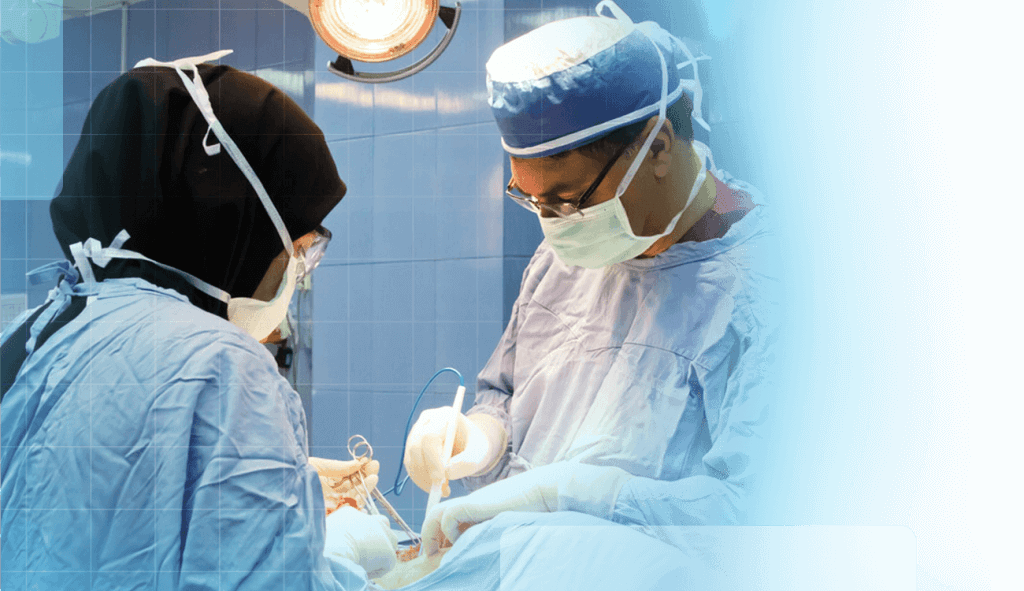
Most parathyroidectomy surgeries are performed while the person is under general anesthesia. Therefore, the patient does not feel pain. In a typical parathyroidectomy, the surgeon makes a small incision in the skin of the neck and removes a thin layer of muscle to gain access to the thyroid gland and the parathyroid glands behind it. Then, after evaluating the parathyroid glands, he removes the damaged glands. The surgeon then moves the muscles in the front of the neck back into position and secures them in place. At the end, the skin of the neck is closed with stitches or glue.
Parathyroidectomy without scar (transoral)
This is a newer method of parathyroid surgery that some patients qualify for. In this method, the surgeon accesses the parathyroid glands through the mouth. This surgery does not leave any visible scars because there is no incision on the outside of the neck.

Parathyroid surgery procedure
The general steps of parathyroid surgery are as follows:
- About an hour before parathyroid surgery, a blue dye (methylene blue) is injected into a fine plastic tube that is inserted into a vein in your arm. The glands absorb a blue dye that helps the surgeon find the parathyroid glands during surgery.
- The operation is usually performed under general anesthesia.
- Once you are completely unconscious, the surgeon will make a small (5-7cm) incision in your neck or mouth and remove one or more of the affected parathyroid glands.
- Then the incision site is sutured, which is usually removed on the second day after surgery.
- Sometimes a thin plastic tube (drain) is inserted into the wound. This will help collect excess fluid from the surgical area. A nurse will usually remove the drain after 24 to 48 hours.

Complications of parathyroid gland surgery
In general, parathyroidectomy is not associated with serious complications. But like any surgery, there may be risks. Its possible short-term complications include:
 Sore throat
- hoarseness
- Infection
- Hematoma (accumulation of blood under the skin)

An experienced and expert surgeon can easily treat any of these side effects of parathyroidectomy.
If the parathyroid surgeon you choose is expert and experienced, the complications of this surgery will be minimized. As a result, choosing the best thyroid surgeon is very effective.
Long-term complications of parathyroidectomy
In some cases, this surgery may cause long-term side effects, the most common of which are:
Hungry bone syndrome (chronic hypocalcemia):
A condition caused by the removal of all or most of the parathyroid glands, in which low levels of PTH cause low levels of calcium in the body. This condition affects the density and strength of bones in the long term.
Recurrent hyperparathyroidism:
If another parathyroid gland becomes overactive after surgery, you may develop hyperparathyroidism again. Also, if the surgeon cannot find the hyperactive gland, you may have a recurrence of hyperparathyroidism.
How long does parathyroidectomy surgery take?
The duration of parathyroid surgery depends on the type of surgery, the number of damaged parathyroid glands, and the skill and experience of the surgeon. But in general, parathyroidectomy surgery usually takes about an hour.
How to prepare for parathyroidectomy surgery?
According to the type of parathyroid surgery and your condition, the surgeon will provide specific instructions to follow in the days leading up to the operation.
- You will most likely need to refrain from eating and drinking for a certain period of time before surgery.
- Talk to the surgeon about your history of certain diseases as well as drug sensitivities.
- Be at the hospital on time for pre-operative examinations.
- In most cases, it is necessary not to use blood-thinning drugs and vitamins a week before the operation.
- Do not smoke 10 days before the operation. Quitting smoking before surgery reduces the possibility of side effects including chest infection and wound infection.
- If you are overweight, losing weight will also help reduce the risk of complications.
- Ask a friend or family member to accompany you home after the operation.
Necessary tests before parathyroid surgery
One or more of the following imaging tests may be used to locate the parathyroid gland or glands that are overactive:
Parathyroid scan (Sestamibi):
For this scan, a shot of sestamibi is injected into your vein. Sestamibi is a radioactive dye that is absorbed by overactive parathyroid glands and can be detected by a scanner that detects radioactivity. A computed tomography (CT) scan may be combined with a sestamibi scan to make it easier to diagnose problems with the parathyroid glands.
sonography:
Ultrasound uses sound waves to create images of the parathyroid glands and surrounding tissue. A small device held on your skin (transducer) sends out a series of high-frequency sound waves and records the reflection of the sound waves as they hit structures inside the body. A computer then converts these echoes into images that can be seen on a screen.
Ultrasound can also be used to identify thyroid nodules that may need treatment during a parathyroidectomy.
4D CT scan:
This type of CT scan, which uses contrast dye to show the parathyroid gland, can be used to help locate an overactive parathyroid gland.
PET-choline CT scan:
This evaluation is done to find parathyroid glands that are not found with other imaging and is usually used after a previous failed surgery.
In addition to imaging tests, the following tests will be performed before parathyroid surgery:
- Blood test, urine test, bone density screening
- Examining the vocal cords and their function using a tool called a laryngoscope
Important points during parathyroid gland surgery
The most important points during parathyroid gland surgery include the following.
- Parathyroid gland surgery is performed under general anesthesia in most cases. Although the surgeon may also use local anesthesia according to the surgical technique and its scope. Local anesthesia is administered with one or more injections near the surgical site. In this case, you will feel some pressure and movement (not pain) during the operation.
- An important part of parathyroid surgery involves protecting the nerves that move the remaining parathyroid glands and vocal cords so they can function normally. Using a nerve-stimulator device during the operation prevents damage to these nerves.
- Usually during surgery, a blood test will be done to measure parathyroid hormone. According to the results of this test, the doctor can make sure that he has removed all the hyperactive parathyroid glands.
Care after parathyroid surgery
The most important care points that you need to follow after parathyroid surgery are:
- Place 2 or 3 pillows under your head while lying down.
- In the first 3 weeks after the operation, avoid vigorous physical activities, lifting heavy objects and bending forward.
- Do not pull your neck back for at least 2 weeks after the operation.
- Showering 24 to 48 hours after the operation is safe.
- Do not soak in a hot tub or swim for 2 weeks after the operation.
- Daily gentle walking will help increase blood circulation and speed up the healing process, as well as prevent constipation and pneumonia.
- As soon as you feel tired, stop your physical activity and rest.
- Take antibiotics and pain relievers prescribed by your doctor regularly.
- Consult your surgeon about taking blood thinners (such as aspirin).
- Use a soft and liquid diet and cool drinks until the sore throat goes away. Consuming foods such as tomatoes and other acidic foods as well as chips and raw vegetables can increase pain and inflammation of the throat.
- See your surgeon if you notice symptoms such as high fever, increased pain, swelling in the throat area, and discharge from the suture site.
Advantages of parathyroid surgery
Parathyroidectomy can improve your quality of life in many ways. By restoring blood calcium levels to a healthy range, this surgery reduces or eliminates the symptoms of hyperparathyroidism, the most important of which are:
- joint's pain
- Muscle weakness
- nausea
- Fatigue
- Brain fog
- kidney stone
- Osteoporosis
- Heart problems
Cost of parathyroid surgery
Various factors affect the cost of parathyroid surgery, so no fixed amount can be specified for this procedure. The most important factors that determine the cost of parathyroid surgery include the following:
- The cost of tests and diagnostic tests
- Duration, complexity and type of parathyroid surgery
- Type of health insurance
- The cost of medicines and post-operative visits
- Duration of hospitalization
FAQ
Full recovery from parathyroid gland surgery takes between one and three weeks, but you can resume your normal activities within a few days. However, be sure to consult your doctor before starting sports and vigorous physical activities.
Yes. You can carry out your normal activities from the time you return home; Although you may feel more tired than usual for a few days. Call your doctor if you experience tingling or spasms in your fingers or toes, as these could be signs of a lack of calcium in your blood.
Most people can return to work 2 weeks after parathyroid surgery. However, the exact time you return to work depends on the extent of the surgery and the type of work you are doing.