
 العربية
 فارسی
فارسی English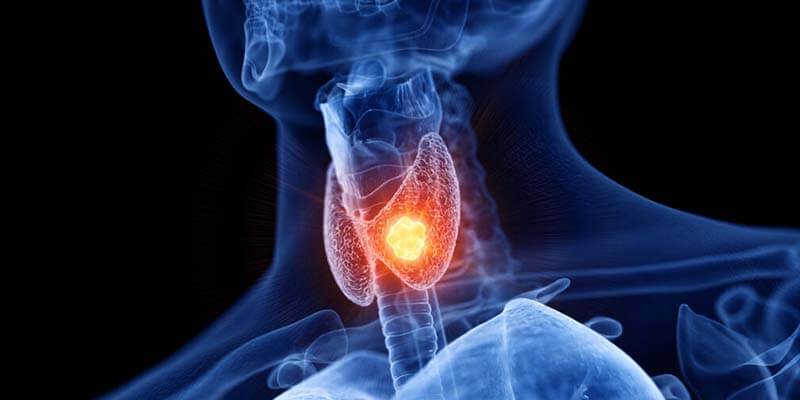
Table of Contents
What is a malignant thyroid nodule?
Despite its small size, the thyroid gland plays a very important role in the basic functions of the body. The key hormones thyroxine and triiodothyronine are produced by the thyroid and manage metabolism, digestion, body temperature, mood and irritability, pulse and heart rate. Thyroid nodules are one of the common thyroid problems that are often benign. But there are also malignant thyroid nodules that can turn into thyroid cancer if they progress. In today’s article, we are going to talk about cancerous thyroid nodule, the most common symptoms and how to diagnose and treat it.
Symptoms of cancerous thyroid nodule
In general, lumps or protrusions of the thyroid gland are called thyroid nodules, which can be benign or malignant. In fact, thyroid nodules are benign in most cases (about 90% of cases). Studies conducted by the American Thyroid Association indicate that only about 2 to 12 percent of thyroid nodules are malignant or cancerous.
Although in some cases thyroid nodules become so large and symptomatic that they can be seen or felt; But most malignant thyroid nodules are completely asymptomatic and most of the time, the patient’s TSH test is also completely normal.
However, malignant thyroid nodules in some cases are associated with symptoms that you should be aware of. If you see the following, it is better to see an endocrinologist for further investigation; Because it is possible that they are a sign of a malignant (cancerous) thyroid nodule:
- Persistent cough
- Difficulty in breathing
- Difficulty swallowing or persistent sore throat
- Hoarseness of voice or other voice changes (without cause)
- Pain in the front of the neck
- Swelling or lump in the neck
- Swollen neck lymph nodes
- Abnormal increase in the number of thyroid nodules at a given time
Fatigue, unexplained weight loss, chest pain, and shortness of breath (in more advanced cases)
Diagnosis of cancerous thyroid cancer nodule
Some thyroid nodules can be diagnosed by clinical examination. However, clinical examination and even thyroid function tests are not enough to determine whether nodules are benign or malignant. According to the patient’s conditions and the level of his symptoms, the specialist doctor uses one or more of the following methods to diagnose a malignant thyroid nodule.
For more information about thyroid nodule, symptoms, how to diagnose and treat it, click on the link.
ultrasound; The first step to diagnose a malignant thyroid nodule
Because most thyroid cancers are asymptomatic, suspicious thyroid nodules should undergo thyroid ultrasound. Ultrasound of the thyroid gland allows the doctor to closely examine the shape and size of the nodule. Thyroid ultrasound reports describe the characteristics of the nodule, assess its risk of malignancy, and help determine the next step, such as the need for an FNA or follow-up ultrasound to monitor the growth of the nodule or the development of worrisome features.
If thyroid nodules are larger than 1 cm and have rough borders or small bright white spots called microcalcifications, the doctor may suspect thyroid cancer and recommend a more specific diagnostic method.
Thyroid scan to detect a cancerous thyroid nodule
Thyroid scan is performed by injecting a radioactive substance into the vein of the patient’s arm or taking it orally, and it can detect hot and cold thyroid nodules. Cold thyroid nodules are inactive thyroid nodules that appear as holes on scans.
Cold thyroid nodules can be benign or malignant. In fact, 20 to 25% of cold thyroid nodules are cancerous. However, thyroid scan cannot distinguish between benign and malignant cold nodules. Therefore, additional diagnostic methods will be needed if a cold nodule is identified.
Biopsy for diagnosis of cancerous thyroid nodule
The only way to definitively determine whether a thyroid nodule is cancerous is to examine it under a microscope. The most common biopsy procedure is called fine needle aspiration (FNA), in which a very small needle is inserted into the thyroid nodule and a few cells are removed for microscopic examination.
However, only a small percentage of nodules are cancerous, and a smaller percentage require treatment. Today, most thyroid cancers are curable and rarely cause life-threatening problems. Non-malignant nodules, or slow-growing cancers, will almost never become a problem.
Biopsy can also be done by CORE method. The difference between CORE biopsy and FNA is the needle used. A core biopsy needle removes more tissue from the thyroid and allows the doctor to perform a more detailed examination.
For more information about FNA thyroid sampling and how to do it, click on the link.
How to treat cancerous thyroid nodule
The treatment of malignant thyroid nodule depends on the size of the nodule, its location, the condition of the patient and the diagnosis of the specialist doctor.
Thyroid surgery:
The most common and main method to treat malignant thyroid nodule is to remove the malignant nodule through thyroid surgery. To remove a cancerous nodule, a method called thyroidectomy is usually used, which includes the complete removal of the thyroid gland. In some cases, only a part of the thyroid gland containing the malignant nodule is removed.
This surgery is very sensitive and if not performed by a skilled and experienced surgeon, it can damage the vocal cords and parathyroid glands.
Alcohol injection:
This non-surgical method involves injecting a small amount of alcohol into malignant thyroid nodules. This is done over several sessions and can be useful in cases where the surgeon cannot easily access the malignant nodule.
Thyroid RF:
This new method is outpatient and minimally invasive, without the need for anesthesia and making an incision in the skin. Thyroid RF involves passing RF radio waves through the thyroid tissues, which increases the temperature of the nodule and destroys its malignant cells. Thyroid RF is performed with the help of ultrasound or tomography and is recommended for cases in which malignant nodules cannot be operated due to their small size or location, or the patient is prohibited from surgery.
Best thyroid surgeon for cancerous thyroid nodule surgery
Thyroid gland surgery is the definitive treatment method to remove malignant thyroid nodules. Although having a cancerous thyroid nodule can seem worrying; But performing surgery at the right time and by an up-to-date and experienced surgeon can solve this problem easily and forever.
Dr. Seyed Ahmad Fanaei, a thyroid and parathyroid surgeon with more than 20 years of experience in general and thyroid surgery and more than 5000 successful thyroid surgeries, is one of the most famous and reliable thyroid surgeons in the country. He, who is known as Iran’s golden claw surgeon, is an active member of the American Thyroid Association (ATA) and by using advanced devices (such as a nerve Stimulators device) during surgery, he significantly reduces the risk of thyroid surgery complications such as damage to the vocal nerves. They reduce
You can make an appointment by filling out the online reservation form or by calling the numbers listed on the site.
last word
Malignant thyroid nodules are not very common and only about 10% of thyroid nodules are considered malignant or cancerous. Although words like malignant and cancerous seem scary; But malignant thyroid nodule is completely treatable. There are different methods for treating malignant thyroid nodule, which will be chosen according to the patient’s condition, the severity of the symptoms, the size of the nodule, and the doctor’s diagnosis.
Thyroid surgery (removal of the entire thyroid or part of it) is known as the definitive treatment method for malignant thyroid nodules. Performing thyroid surgery by an experienced and well-known surgeon who has access to the latest technologies and devices in the world minimizes the risk of complications from this surgery.
References
https://www.radiology.ca/article/i-have-thyroid-nodule-do-i-have-cancer/https://www.roswellpark.org/cancertalk/202310/are-my-goiters-thyroid-nodules-cancerous#:~:text=How%20do%20you%20know%20if,white%20spots%20called%20micro%2Dcalcifications




No comment