
 فارسی
فارسی English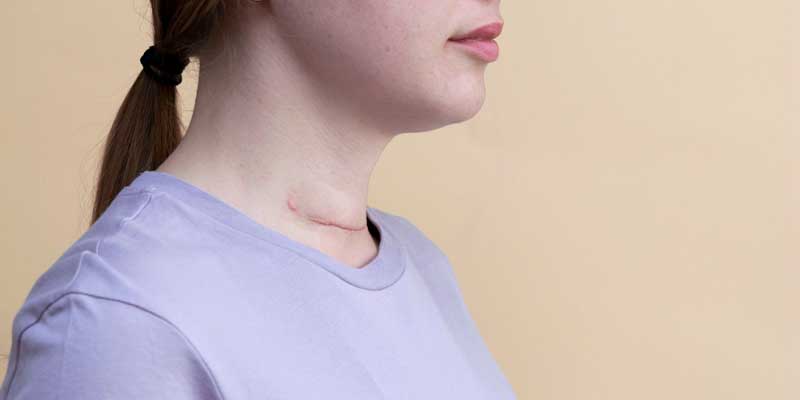
Table of Contents
Is hyperthyroidism normal after thyroid surgery?
Thyroid surgery is performed to eliminate problems such as thyroid nodules, suspicious masses, and hyperthyroidism. Most patients develop hypothyroidism after this surgery; but in some cases, hyperthyroidism occurs following this surgery. In fact, the occurrence of hyperthyroidism after thyroid surgery is not a common issue, and the presence of some factors related or unrelated to surgery can increase its likelihood.
Causes of hyperthyroidism after thyroid surgery
Hyperthyroidism after thyroid surgery may occur for various reasons. In some cases, this condition is caused by factors related to the surgery itself; but at other times, it is not directly related to the operation and is related to underlying causes that existed before surgery but were not diagnosed.
-
Direct causes related to surgery
The following are the most important causes of hyperthyroidism after surgery that are somehow related to the thyroid surgery itself.
Remaining active thyroid tissue:
There are generally two types of thyroid surgery; complete and partial thyroid surgery. In partial thyroid surgery, the entire thyroid gland is not removed and some of its tissue remains in the body. If this remaining tissue starts to function independently and outside the body’s normal control, it can gradually produce more thyroid hormone and cause hyperthyroidism. This condition is more likely to occur in patients who had hyperthyroid tissues before the surgery, such as toxic goiter or functional nodules; because the remaining tissue has a higher capacity for hormonal activity.
Growth or activation of ectopic tissue:
Even after complete thyroid surgery, there is a possibility of hyperthyroidism. This hyperthyroidism occurs due to the activation of ectopic thyroid tissue. Sometimes thyroid tissue remains in places outside the gland’s normal location, such as in the thyroglossal duct. Such tissue is usually small and inactive. However, it can grow even after successful thyroid surgery and gradually start producing more thyroid hormone. In this condition, hyperthyroidism appears months or even years after surgery, and the person suddenly experiences symptoms such as palpitations, weight loss, or anxiety.
Sudden release of hormones during surgery:
The doctor must manipulate and palpate this sensitive gland during surgery to separate the thyroid from surrounding tissue. This pressure causes thyroid hormones stored in the follicles of the gland to enter the bloodstream. This temporarily increases the level of thyroid hormones in the blood, causing a condition called transient hyperthyroidism. This is usually short-lived, and hormone levels return to normal within a few days to weeks. The symptoms of this transient hyperthyroidism are similar to those of true hyperthyroidism, but there is no need for long-term antithyroid medication.
-
Causes unrelated to thyroid surgery
Hyperthyroidism after surgery can occur for reasons that have nothing to do with the surgical procedure, including:
Infection with autoimmune thyroid diseases:
In patients with a history of autoimmune thyroid diseases such as Graves’, the body’s immune system can continue to affect the remaining thyroid tissue after surgery. This stimulation is sometimes so severe that it leads to the continuation or recurrence of hyperthyroidism after surgery. For example, in Graves’ disease, TSH receptor-stimulating antibodies stimulate the thyroid to produce excessive amounts of thyroid hormones. If this autoimmune disease is not well controlled before surgery or hormone levels are still high, the symptoms of hyperthyroidism after surgery will persist or reappear.
Thyroiditis:
Inflammation of the thyroid tissue causes the destruction or increased permeability of the thyroid follicles, causing the leakage of stored thyroid hormones into the blood. This condition causes temporary hyperthyroidism. As the thyroid hormone stores are depleted, the hyperthyroidism phase ends, and the thyroid may even become hypothyroid for a while before returning to normal.
Excessive use of replacement hormone:
After thyroid surgery, most patients need to take levothyroxine to compensate for the thyroid hormone deficiency. If the appropriate dose of replacement hormone is not adjusted after thyroid surgery, the patient will experience symptoms of hyperthyroidism. This condition resolves with dose adjustment and does not require serious medical measures or antithyroid treatment.
Excessive intake of iodine:
A balanced intake of iodine is essential for optimal thyroid function. Excessive iodine intake through certain medications such as amiodarone, supplements, or radiological contrast agents can stimulate residual thyroid tissue or exacerbate underlying thyroid disease in some susceptible individuals. This condition increases the risk of postoperative hyperthyroidism by increasing hormone production.
Prevention of hyperthyroidism after thyroid surgery
A high percentage of cases of hyperthyroidism after surgery can be prevented or controlled early with proper management and attention to a number of simple tips, including:
Choosing an experienced surgeon:
The first and most important step to prevent complications of thyroid surgery, including hyperthyroidism after surgery, is to choose a skilled and up-to-date surgeon who uses advanced equipment during surgery. A skilled surgeon with complete mastery of the anatomy of the thyroid and its adjacent structures uses the best surgical techniques and the most modern devices in the world during surgery. This minimizes the possibility of damage to nearby tissues and sudden hormone release during surgery. For example, skilled surgeons use tools such as a neurometer to closely monitor the condition of the vocal nerves during surgery and prevent damage to them. The use of such advanced devices, along with the skill and experience of the surgeon, plays an important role in preserving healthy tissue and reducing the risk of postoperative complications, including thyroid dysfunction.
Pre-surgical evaluations:
A careful assessment of the patient’s condition before thyroid surgery is also of particular importance. Before making the final decision for surgery, the surgeon examines the thyroid function status and the presence of any lesions (nodules) or underlying diseases such as Graves’ disease by prescribing complete hormonal tests, checking antibodies, as well as specialized imaging such as thyroid ultrasound. This maximizes the likelihood of thyroid surgery success by estimating the possible risks associated with the patient’s condition and applying the best surgical strategy.
Regular monitoring of thyroid hormone levels after surgery:
Regular measurement of thyroid hormones TSH, T3 and T4 after surgery is a simple and very effective measure to prevent hyperthyroidism after surgery. By doing this, the doctor can evaluate the function of the remaining thyroid tissue and the effectiveness of the medications and adjust the patient’s medication dosage if necessary.
Regular and correct use of prescribed medications:
The doctor will prescribe specific medications to the patient after thyroid surgery, taking them correctly and regularly is very important. Prescribed medications keep the level of thyroid hormones at the optimal level and prevent hyperthyroidism by maintaining hormonal balance.
Monitoring the patient’s autoimmune diseases:
Graves’ is an autoimmune disease that is known to be the main cause of hyperthyroidism. If this disease is diagnosed before surgery, careful monitoring after surgery will be much more important because this disease can lead to a recurrence of hyperthyroidism by stimulating the immune system and overactivating the remaining thyroid tissue.
Controlling the patient’s iodine intake:
People who have undergone thyroid surgery should be careful about consuming iodine. Excessive iodine intake through supplements, medications, or certain foods can stimulate the remaining thyroid tissue or immune system, increasing the risk of hyperthyroidism recurring. Therefore, it is recommended that patients after thyroid surgery avoid taking iodine supplements and consult their doctor about their iodine intake.
Treatment of hyperthyroidism after thyroid surgery
Treatment of hyperthyroidism after thyroid surgery directly depends on the causes of its occurrence. Therefore, the first step is to diagnose the cause or causes of postoperative hyperthyroidism. The most common methods of treating hyperthyroidism caused by thyroid surgery include the following:
-
Adjusting the dose of medication (levothyroxine)
The most common cause of hyperthyroidism after surgery is excessive use of replacement hormone, namely levothyroxine tablets. In such situations, by reducing the dose received, the patient’s hormonal balance returns in a short time and the symptoms of hyperthyroidism resolve within a few days to a few weeks.
-
Symptom control with beta blockers
These drugs do not reduce the production of thyroid hormones; they are used only to reduce the severity of hyperthyroid symptoms such as palpitations, tremors, anxiety, and sweating. Beta blockers are fast-acting and are usually the main treatment for transient hyperthyroidism after surgery or thyroid inflammation (thyroiditis). To temporarily control the symptoms of transient hyperthyroidism, your doctor will usually prescribe beta blockers such as propranolol to reduce palpitations, anxiety, and sweating.
-
Antithyroid drugs
If hyperthyroidism after surgery is caused by residual tissue activity or diseases such as Graves’ disease, antithyroid drugs (metimazole) are used to treat it. These drugs work by inhibiting hormone production, gradually lowering hormone levels.
-
Radioactive iodine
In the event of activation of the remaining thyroid tissue after surgery or recurrence of hyperthyroidism in diseases such as Graves’ disease, as well as failure to respond to antithyroid drugs, radioactive iodine is used to deactivate the hormone-producing tissue. The active thyroid tissue gradually becomes inactive by absorbing radioactive iodine, and as a result, hyperthyroidism is controlled.
-
Correction of triggering factors
If hyperthyroidism after surgery is due to high iodine intake or the use of certain drugs such as amiodarone, the main treatment will include removing the triggering factor. By stopping these factors, the level of thyroid hormones will naturally decrease within a few weeks. During this time, the doctor will regularly check the patient’s hormonal status to ensure that the level of thyroid hormones is regulated.
-
Repeat thyroid surgery
Repeat surgery is performed in a small percentage of patients. Repeat thyroidectomy is recommended if a significant portion of active thyroid tissue remains and does not respond to other treatments.
The bottom line
In general, hyperthyroidism after thyroid surgery is not a common condition; but it may occur for reasons such as remaining active thyroid tissue, autoimmune thyroid diseases, receiving an inappropriate dose of replacement hormone, etc. This condition is largely preventable by following a number of vital points, and even if it occurs, it can be well controlled by accurately diagnosing the cause and choosing the right treatment.




No comment