
 فارسی
فارسی English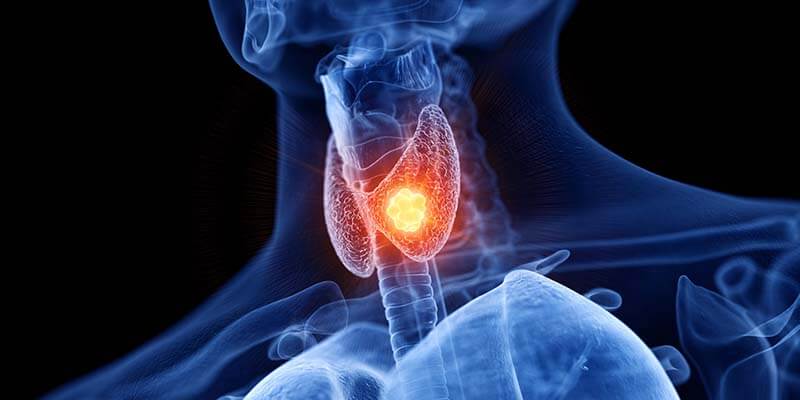
Table of Contents
Risk of thyroid nodule
Thyroid nodules are small lumps that form in the thyroid gland, located in the front of the neck. These nodules are usually common and often benign (non-cancerous). However, in rare cases, some nodules may be cancerous and even fatal, requiring immediate medical evaluation and care. As you know, thyroid surgery is the main way to treat thyroid nodules.
When is a thyroid nodule dangerous?
Most thyroid nodules don’t cause any symptoms, and many people don’t even know they have one. To read more about thyroid nodule, click on the link.
However, there are some potential risks associated with thyroid nodules that should be considered:
Cancerous nodules
About 5 to 10% of thyroid nodules may be malignant and cancerous. Types of thyroid cancer include papillary and follicular cancers, as well as medullary cancer and anaplastic cancer. Papillary carcinoma, which is the most common type, is usually curable and has a good prognosis. However, some rarer types, such as anaplastic thyroid cancer, are aggressive and spread quickly.
Pressure on adjacent structures
If the nodules grow to a large size, they may press on the trachea, esophagus, or surrounding nerves. This leads to problems such as difficulty swallowing, breathing, or voice changes. Large nodules may also be visually visible and cause swelling in the neck.
Hyperthyroidism or hypothyroidism
Some nodules may affect normal thyroid function. If a nodule produces thyroid hormones independently, it leads to hyperthyroidism, with symptoms such as palpitations, sudden weight loss, excessive sweating, and irritability. On the other hand, if the thyroid does not function properly, it causes hypothyroidism, which leads to fatigue, weight gain and depression.
Bleeding inside the nodule
In some cases, bleeding may occur within a thyroid nodule, which quickly causes pain and swelling. Although this condition is not dangerous, it can cause a person discomfort and requires further investigations by a specialist doctor.
Which thyroid nodule is dangerous?
A thyroid nodule is dangerous when it has certain symptoms or characteristics that point to cancer or other complications related to the thyroid gland. Some of the things that indicate that thyroid nodules are dangerous include:
Suspicious features in ultrasound
Ultrasound is one of the main diagnostic methods for evaluating thyroid nodules. Nodules that show the following features on ultrasound are more likely to be dangerous:
• Irregular or indistinct border: Nodules with irregular borders may be cancerous.
• Small calcium (microcalcification): the presence of small calcium points in the nodule, especially in papillary thyroid cancer.
• Hypoecho: darker nodules than the surrounding tissue (hypoecho) are more likely to be dangerous.
• Solid nodules or with solid and liquid content: completely solid nodules or with a solid part are more likely to be cancerous.
• Growth greater in width than in length: Nodules that are wider or longer than round in images look more suspicious.
Size larger than 1 cm
Nodules larger than 1 cm in diameter are more likely to be cancerous. Although smaller nodules can be dangerous, large nodules require more monitoring or sampling.
Rapid growth of nodules
A nodule that has grown suddenly or in a short period of time should be investigated more quickly. Rapid growth may be a sign of cancer or an invasive thyroid nodule.
Abnormal biopsy
If a nodule is suspected, the doctor may perform a needle biopsy (FNA). If the biopsy results show the presence of abnormal or cancerous cells, the thyroid nodule is considered dangerous and requires treatment.
Physical signs and clinical symptoms
Thyroid nodules that cause the following symptoms may be dangerous and should be taken seriously:
• Voice change or voice harshness
• Difficulty swallowing or breathing due to pressure of the nodule on the trachea or esophagus
• Pain in the neck that may spread to the jaw or ear
• Visible swelling in the neck area
Thyroid hormone disorders
Nodules that interfere with the production of thyroid hormones, such as hyperthyroidism or hypothyroidism, need to be investigated. Nodules that produce too much hormone independently (toxic nodules) may require specific treatment.
Family history of thyroid cancer
People with a family history of thyroid cancer or other thyroid diseases are more at risk of developing cancerous nodules. If someone in the family has such a history, special attention to thyroid nodules is necessary.
History of radiation exposure
People with a history of medical treatments or radiation exposure (especially in childhood) are more likely to develop cancerous nodules.
Can cancerous nodules be treated?
Cancer diagnosis is always worrying; However, even if the nodule turns into thyroid cancer, there are still many reasons for hope.
Thyroid cancer is one of the most curable types of cancer. Surgery to remove the tumor usually resolves the problem, and recurrence or spread of cancer cells is rare. People who undergo surgery to remove the thyroid gland may need to take thyroid hormone to maintain their body’s chemical balance.
Whether the nodule is benign or not, a bothersome thyroid nodule is often well managed. Of course, choosing an experienced specialist also means having more options to personalize treatment and achieve better results.
Choosing an experienced and skilled thyroid surgeon with accurate and fast diagnosis can lead to surgery without side effects. Dr. Ahmad Fanai, a thyroid and parathyroid surgeon and an active member of the American Thyroid Association, performs surgeries with the most equipped equipment and technology in the world. Dr. Ahmad Fanai, who is also known as Iran’s Golden Claw, is the only thyroid surgeon who performs surgery with a neurometer device without damaging the vocal nerves.
Is it possible for a benign thyroid nodule to become malignant (cancerous)?
Benign thyroid nodules rarely turn into malignant (cancerous) nodules. Most benign nodules remain stable over time and are not at risk of becoming cancerous. However, in rare cases changes may occur in the nodule leading to malignancy.
Doctors usually check for thyroid nodules using ultrasound and fine needle aspiration biopsy. If suspicious changes are observed, regular monitoring and follow-up are recommended so that necessary measures can be taken immediately in case of possible malignant changes.
final word
Most thyroid nodules are harmless, and many people live with benign nodules without any problems. But some nodules may become cancerous or problematic. Using imaging tools and needle biopsy, dangerous nodules are diagnosed and appropriate treatment is given to prevent possible risks. Although thyroid nodules are rarely fatal; However, regular follow-up is essential to maintain health.
References
https://www.mayoclinic.org/diseases-conditions/thyroid-nodules/symptoms-causes/syc-20355262https://my.clevelandclinic.org/health/diseases/13121-thyroid-nodulehttps://www.uchealth.org/today/when-to-worry-about-thyroid-nodules/https://www.hopkinsmedicine.org/health/conditions-and-diseases/thyroid-nodules-when-to-worry



No comment