
 العربية
 فارسی
فارسی English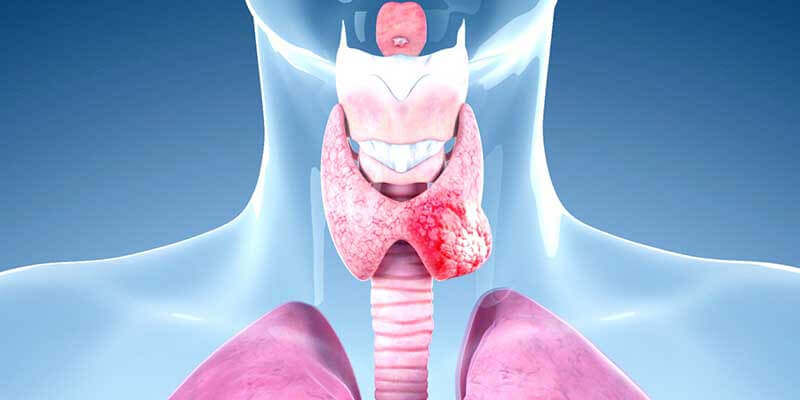
Table of Contents
Follicular thyroid cancer
Follicular thyroid cancer, or follicular thyroid carcinoma, is one of the two main types of thyroid cancer (the other type is papillary thyroid cancer). This cancer begins in the outer layer of cells in the thyroid gland that are responsible for producing and secreting thyroid hormones (especially T3 and T4). T3 hormones, although produced in very small amounts, are very important for regulating metabolism and cell function. In contrast, T4 is secreted in larger amounts and helps regulate heart rate and body temperature. The hallmark of follicular carcinoma is the formation of small follicles, or hollow, round structures, in the thyroid tissue. These cancer cells can invade nearby tissues and spread to distant parts of the body, especially the lymph nodes, lungs, and bones.
Features of Follicular Thyroid Cancer
Follicular thyroid cancer has unique characteristics, the most important of which include the following:
- Age of incidence: This type of thyroid cancer is most common between the ages of 40 and 60.
- Gender prevalence: This cancer is 3 times more common in women than in men. It is more common in men than in women.
- Prognosis: The size of the tumor plays a decisive role in the prognosis for treatment. Tumors smaller than 1 cm usually have a good prognosis for treatment.
- Radiation exposure: This type of thyroid cancer is rarely caused by radiation exposure.
- Lymph node spread: Spread of this cancer to the lymph nodes is relatively rare (about 12 percent).
- Vascular invasion: Invasion of the blood vessels (veins and arteries) within the thyroid gland is relatively common.
- Metastasis: Spread of this cancer to other parts of the body (such as the lungs or bones) is rare; but it is more likely than papillary cancer.
- Cure rate: The overall cure rate for follicular thyroid cancer is high (nearly 95 percent for small tumors in young patients). However, this rate decreases with age.
Stages of Follicular Thyroid Cancer
Stage is the process of determining whether and how far the cancer has spread. Staging follicular thyroid cancer is a critical factor in choosing treatment options, determining the extent of surgery, and predicting the likelihood of a cure. The staging system for follicular thyroid cancer is different from other cancers in that it also takes into account the patient’s age. In the American Joint Committee on Cancer (AJCC) staging system for follicular and papillary thyroid cancers, the current age cutoff is 55 years. This means that the cancer is staged differently for patients younger than 55 years than for patients older than 55 years.
The TNM staging system is commonly used to stage follicular thyroid cancer. The letters T, N, and M indicate the size of the tumor, the spread to lymph nodes, and the presence of metastases, respectively. Doctors use information from T, N, and M to determine the stage of the cancer. In other words, the TNM letters are a tool to more accurately assess the extent of the cancer’s spread, and the numbers 1 through 4 are a summary of this information that is used to determine the overall stage of the cancer. With this in mind, the TNM system categorizes patients aged 54 years or younger as having stage 1 thyroid cancer if the cancer is confined to the thyroid and nearby areas. If the cancer has spread to distant parts of the body, it is labeled as stage 2.
Staging of Follicular Cancer
The staging of follicular thyroid cancer in patients aged 55 years and older is also as follows:
Stage 1: The cancer is confined to the thyroid or the tumor is less than 2 centimeters in diameter.
Stage 2: The cancer has spread to nearby lymph nodes but has not yet spread to distant parts, or the tumor is larger than 4 centimeters in diameter and has spread to the striated muscles surrounding the thyroid.
Stage 3: The cancer has spread beyond the thyroid to nearby structures in the neck, such as the larynx or esophagus.
Stage 4a: The cancer has spread extensively beyond the thyroid and into the spine or major blood vessels. Stage 4b: The cancer has spread to distant organs, bones, or other vital structures.
Symptoms of Follicular Thyroid Cancer
Follicular thyroid cancer (like other thyroid cancers) is usually asymptomatic in its early stages. However, as the cancer progresses, you may experience symptoms such as:
- A painless lump in the front of the neck or a thyroid nodule (which may feel like a small, palpable lump in the neck)
- An enlarged thyroid gland (also called a goiter)
- Breathing problems (such as shortness of breath or a feeling of choking)
- Hoarseness or changes in voice
- Neck pain
- Swollen lymph nodes (which may feel like small, tender lumps in the neck or under the jaw)
Note that these symptoms do not necessarily indicate cancer and may be caused by noncancerous conditions such as thyroiditis.
Diagnosis of Follicular Thyroid Cancer
Your doctor will first review your medical history, ask about your family history of thyroid cancer, and then perform a physical examination of your thyroid gland. During the exam, your doctor will check for a goiter (a significant enlargement of the thyroid gland) or any lumps. If your doctor suspects follicular thyroid cancer, they may recommend additional tests, which may include:
Ultrasound:
This is the simplest way to look at the thyroid gland, but it is not a definitive way to diagnose follicular thyroid cancer.
Digital imaging:
Your doctor may recommend an MRI or CT scan to get detailed images of your thyroid gland.
Fine-needle aspiration biopsy:
In a thyroid biopsy, a thin needle is inserted into a lump in your neck to collect a sample of cells to look for cancer cells under a microscope.
Correct-needle biopsy:
If the results of a fine-needle aspiration biopsy are inconclusive, your doctor may choose to perform a core-needle biopsy, which involves using a larger needle.
After follicular thyroid cancer is diagnosed, more tests are done to determine the stage of the cancer and plan appropriate treatment. These tests usually include blood tests, more detailed imaging tests, and sometimes surgery to remove the thyroid gland (both to diagnose and treat follicular thyroid cancer).
Treatment options for follicular thyroid cancer
Treatment for follicular thyroid cancer is determined by the stage of the cancer, the patient’s overall health, and their treatment preferences. The main goal is to completely remove the cancer cells and prevent the disease from coming back. Treatment options usually include a combination of surgery, radioactive iodine, and thyroid hormone replacement therapy, which we’ll discuss below.
Thyroidectomy (removal of the thyroid gland):
This means removing part of the thyroid gland (partial thyroidectomy) or the entire thyroid gland (total thyroidectomy). If the cancer has spread to the lymph nodes, the lymph nodes may also be removed.
Dr. Seyed Ahmad Fanaei is a thyroid and parathyroid surgeon and a member of the American Thyroid Association. Known as the Golden Claw Thyroid Surgeon, he performs thyroid surgeries using the most up-to-date medical equipment in the most equipped hospital in the country. To choose the best thyroid surgeon, be sure to click on the link provided.
Radioactive Iodine (Iodine Therapy):
After surgery to destroy the remaining thyroid tissue, radioactive iodine is injected into the thyroid tissue.
Hormone Replacement Therapy:
After partial or complete removal of the thyroid gland, thyroid hormone pills are prescribed to provide the body with essential hormones and prevent the regrowth of cancer cells.
Chemotherapy and Radiation Therapy:
In more advanced cases of follicular thyroid cancer, non-surgical methods such as chemotherapy or radiation therapy are used to target and fight cancer cells.
Targeted therapy:
This method uses drugs that specifically bind to molecules or genes in cancer cells and kill them. Targeted therapy is an advanced treatment option that can be effective in certain cases, especially in advanced stages of follicular thyroid cancer.
Immunotherapy:
Immunotherapy drugs are given as an injection into a vein. They are usually used as second-line treatments if initial targeted therapies are not effective.
Essential Follow-up After Treatment for Follicular Thyroid Cancer
All patients with follicular thyroid cancer should be followed for life to monitor their disease and hormones. Patients should have their blood thyroglobulin levels checked annually and a high-resolution ultrasound of the neck performed. Serum thyroglobulin levels are generally not useful for the early diagnosis of thyroid cancer; however, they are very useful in the follow-up of differentiated carcinomas (if a total thyroidectomy is performed). High serum thyroglobulin levels, which are initially low after total thyroidectomy and then gradually increase, especially with TSH stimulation, almost always indicate cancer recurrence. Values greater than 10 ng/mL are often associated with structural (detectable) recurrence; even if the iodine scan is negative. Diagnostic imaging methods should be used to follow up on high thyroglobulin levels to more accurately assess the possibility of cancer returning at the primary tumor site, nearby lymph nodes, or other parts of the body.
Follicular Thyroid Cancer Survival Rates
Follicular thyroid cancer survival rates are estimates based on the percentage of patients with a similar stage of cancer who have survived 5 years or more after their cancer was diagnosed. These rates are based on results from a large number of people in the past. These rates may give patients and doctors an idea of how successful treatment is likely to be; however, they cannot predict how well an individual patient will recover.
The American Cancer Society reports that the five-year relative survival rates for follicular thyroid cancer are as follows:
- More than 99.5 percent for patients whose cancer has not spread outside the thyroid.
- 98 percent if the cancer has spread to nearby areas.
- 67 percent if the cancer has metastasized to distant sites in the body.
How common is follicular thyroid cancer?
About 10 to 15 percent of all thyroid cancers are follicular thyroid cancer. In fact, it is the second most common thyroid cancer. Most people with thyroid cancer have papillary thyroid cancer (70 to 80 percent of all thyroid cancers).
How curable is follicular thyroid cancer?
Follicular thyroid cancer is usually very curable, especially when it is detected early. The success of treatment depends on several factors, including the stage of the cancer at the time of diagnosis, how far it has spread, the patient’s age, overall health, and the characteristics of the cancer cells. Compared with more aggressive thyroid cancers such as anaplastic thyroid cancer, follicular thyroid cancer often progresses more slowly. As a result, early detection significantly increases the chances of successful treatment.
The bottom line
Although less common than papillary thyroid cancer, follicular thyroid cancer is more aggressive and tends to occur at an older age. Diagnosing follicular thyroid cancer involves a medical history, a physical exam, and imaging tests and a biopsy. Staging the cancer using the TNM system helps determine the extent of the cancer’s spread and choose the right treatment. Follicular thyroid cancer is usually curable, especially when it is detected early.





No comment