
 العربية
 فارسی
فارسی English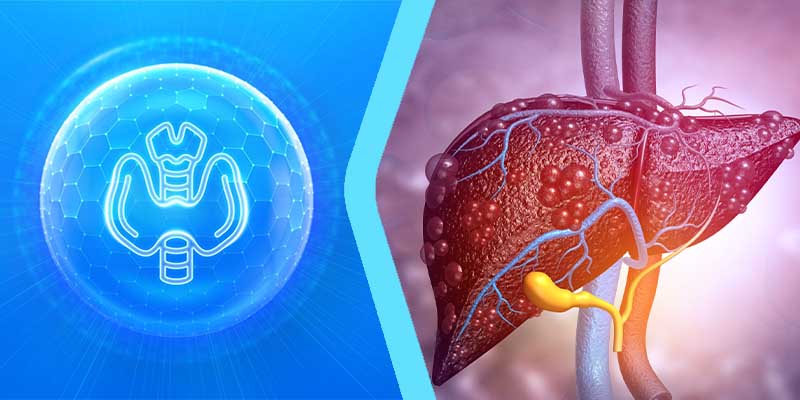
Table of Contents
Connection Between the Thyroid and the Liver
The thyroid gland and the liver are two vital organs with a close and reciprocal relationship. The thyroid regulates the body’s metabolism by producing hormones, while the liver plays a key role in activating and converting these thyroid hormones into their usable form (T3). The liver is also responsible for clearing thyroid hormones after they have performed their function. Because of this complex interdependence, the health of one organ directly affects the other. Thyroid dysfunction—especially hypothyroidism—can disrupt lipid metabolism in the liver, leading to fat accumulation and non‑alcoholic fatty liver disease (NAFLD), and vice versa. Severe liver failure can also negatively affect thyroid hormone regulation
Understanding Hypothyroidism and Fatty Liver
Hypothyroidism
Hypothyroidism refers to an underactive thyroid gland. This butterfly‑shaped gland in the front of the neck secretes hormones essential for growth, development, and metabolic regulation. In hypothyroidism, the body does not have enough thyroid hormone. Although symptoms may not appear immediately, prolonged deficiency can gradually lead to serious problems such as heart disease, high cholesterol, and other health concerns.
Fatty Liver
Fatty liver is a general term for the condition in which fat accumulation in liver cells exceeds the normal level (5–10% of liver weight). It is divided into two main types: alcoholic and non‑alcoholic. The most common form—directly associated with obesity, diabetes, and metabolic issues—is non‑alcoholic fatty liver disease (NAFLD). NAFLD progresses through four stages:
• Steatosis (simple fat accumulation)
• Steatohepatitis (inflammation)
• Fibrosis (mild scarring)
• Cirrhosis (severe scarring and permanent damage)
Does Hypothyroidism Cause Fatty Liver?
Yes. Research provides strong evidence linking hypothyroidism to NAFLD, identifying it as an independent cause in some individuals. The evidence is strong enough that specialists have defined a new subtype of NAFLD called hypothyroidism‑induced NAFLD (HIN).
A Two‑Way Independent Risk Factor
Both overt and subclinical hypothyroidism are considered independent risk factors for NAFLD. Hypothyroidism occurs much more frequently in people with NAFLD than in the general population—approximately 17% of NAFLD patients have hypothyroidism. Studies also show that higher TSH levels correlate with increased NAFLD risk. The relationship is bidirectional; patients with hypothyroidism are 2.7 times more likely to develop NAFLD and NASH (its inflammatory form).
Mechanisms Linking Hypothyroidism and Fatty Liver
Researchers have identified several mechanisms explaining this association:
• Impaired fat metabolism: Low thyroid hormones hinder the liver’s ability to break down fats, increasing fat accumulation.
• Insulin resistance: Hypothyroidism raises the risk of insulin resistance and glucose metabolism disorders, both major contributors to NAFLD.
• High blood lipids:Up to 90% of hypothyroid patients have abnormal serum lipids, including high cholesterol and triglycerides, which are known risk factors for NAFLD.
• Weight gain: Hypothyroidism increases the risk of weight gain or obesity—both major NAFLD risk factors.
Symptoms of Fatty Liver Caused by Hypothyroidism
Early‑stage NAFLD usually has no symptoms and may go unnoticed for years. When symptoms do appear, they may include:
• Discomfort or dull pain in the upper right abdomen
• Confusion
• Fatigue
• Weakness
• Weight loss (usually in advanced stages)
Hypothyroidism also has its own symptoms, including fatigue, depression, joint pain, and muscle weakness. Symptoms may overlap, making diagnosis more challenging.
Diagnosis of Hypothyroidism‑Induced Fatty Liver
Diagnosis begins with a physical examination. A doctor may check for signs of insulin resistance, liver enlargement, or symptoms of cirrhosis. Additional tests include:
• Blood tests: Elevated ALT, AST
• Imaging: Ultrasound, CT scan, MRI, or elastography to assess fat accumulation and fibrosis
• Biopsy: To evaluate liver damage and exclude other diseases
Treatment of Fatty Liver Caused by Hypothyroidism
There is no FDA‑approved medication specifically for NAFLD. However, hypothyroidism‑induced NAFLD is managed through hormone regulation and lifestyle modification.
Treatment of Hypothyroidism
Managing the underlying thyroid disorder is the first and most crucial step. Hypothyroidism is treated with levothyroxine (synthetic T4). Studies show that early treatment of hypothyroidism can prevent NAFLD progression. In one study, 15 months of levothyroxine reduced NAFLD prevalence by nearly half in patients with subclinical hypothyroidism.
Lifestyle Modifications
• Weight loss
• Reduced consumption of high‑fructose foods and carbohydrates
• Avoiding or limiting alcohol
• Regular physical activity
Adjunct Medications and Emerging Therapies
• Lipid‑lowering medications
• Blood‑sugar‑control medications
• Low‑dose thyroid hormone therapy may benefit even euthyroid NAFLD patients
• New drugs such as Resmetirom (a selective thyroid hormone receptor agonist) show promise in clinical trials for NASH
Recommendations for Patients
If You Have Hypothyroidism:
Optimize thyroid treatment and monitor for NAFLD if abnormal liver tests or signs of metabolic syndrome are present.
If You Have NAFLD:
One in six NAFLD patients has subclinical hypothyroidism. Early detection is important because treating hypothyroidism may reduce NAFLD risk and complications.
Final Word
NAFLD is the most common liver disease worldwide. Thyroid hormones (T3, T4, and TSH) play essential roles in regulating fatty acid synthesis, cholesterol, and carbohydrate metabolism. Numerous studies confirm that hypothyroidism is a major risk factor for NAFLD. Early diagnosis and treatment of hypothyroidism—combined with lifestyle changes—help prevent NAFLD progression. Evidence also shows that treating hypothyroidism significantly improves thyroid‑related fatty liver (HIN).





No comment